
Face The Exams With Confidence: Our Term 4 Revision Plan

It’s the most crucial time of the year for students.
The year-end examinations take place not long after the September holidays, and students are busy trying to revise everything before they sit for the exams. Between the last teaching topics and the exams, there isn’t a lot of time. Yet, students need to revise 3 terms’ worth of content and practice their exam skills – for as many as 8 subjects for some students.
That is why you can’t just go in without a plan. Effective revision is about having a plan and focusing your energy on what brings the most results.
At Future Academy, our three tuition centres in Singapore are gearing right into revision mode, helping our students focus on the areas that will make the biggest difference to their examination performance. Here’s how we prepare our students to face their year-end exams with greater confidence.
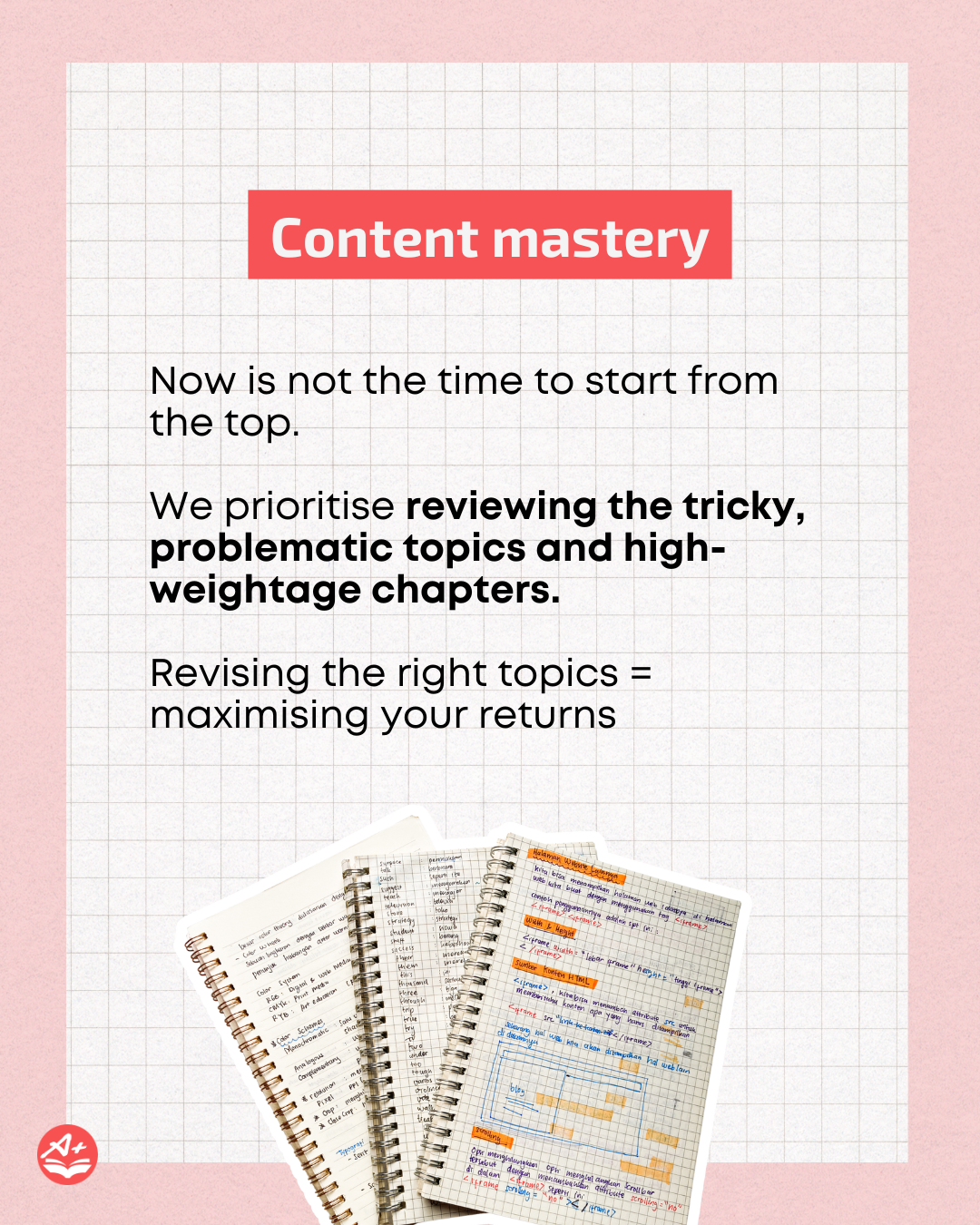
Content mastery: Focus on what matters
By the time year-end revision begins, students have already covered most – or all – of their syllabus.
While it is ideal to plan to revise all the topics before the exams, we find that some topics are easier for students to manage alone. Our role as tutors is to provide support for topics that they find more difficult, or highlight important areas that students tend to neglect.
In classes like our Secondary Math Tuition and Secondary Science Tuition, we prioritise these topics that are tricky or high-weightage in exams. It helps that our classes are small, so we can also identify topics to revisit based on specific groups or individual students
Revision for these topics might look like re-explaining difficult concepts, working through common question types, or providing additional practice until the students are comfortable applying the concept independently.
If you find that you need help with specific topics, or if you are unsure what topics to focus on, don’t hesitate to speak to your tutor – because it’s literally their job to help you!
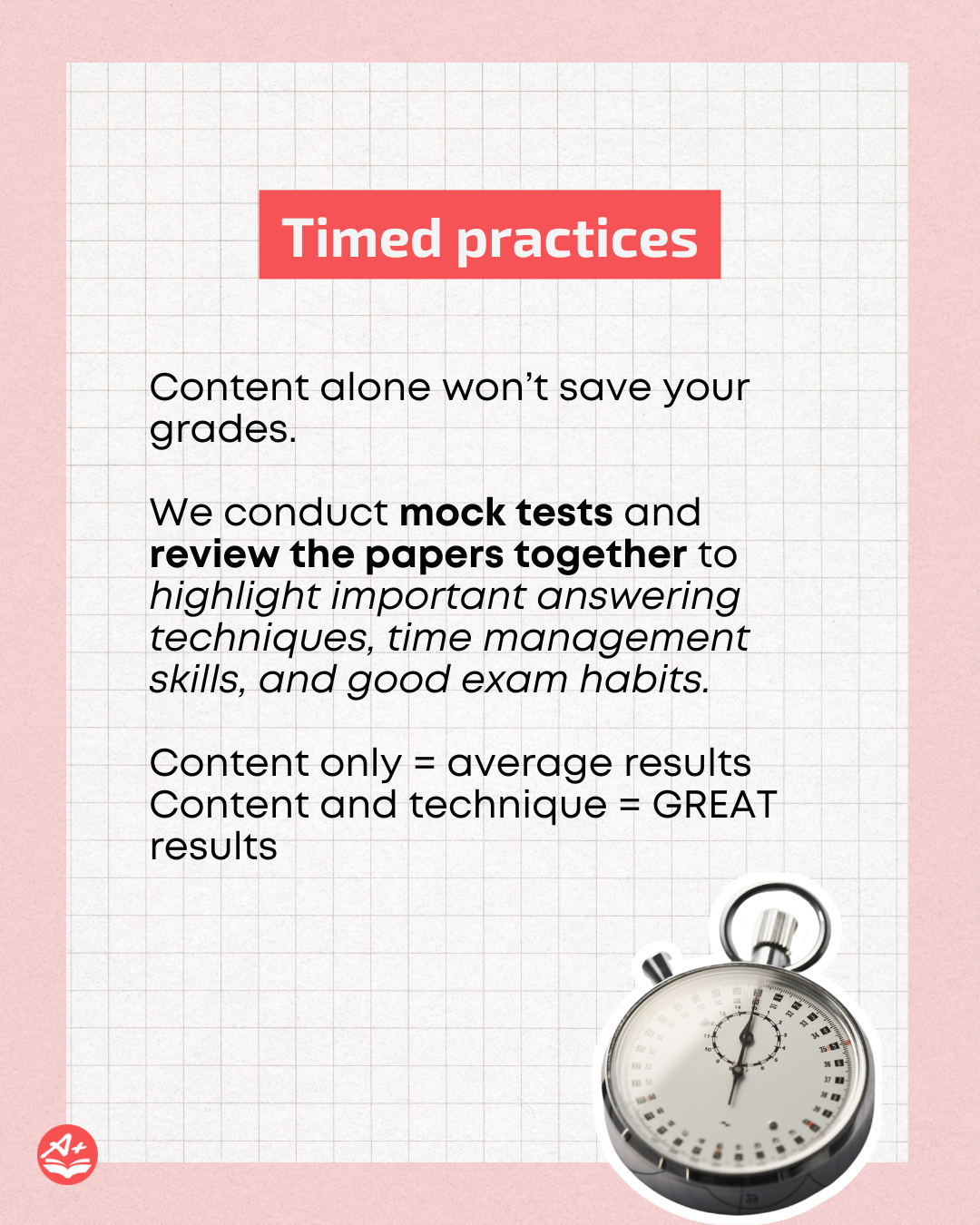
Timed practice: Content alone won’t save your grades
Knowing the content is important – but it is only one part of doing well in an examination.
A student may understand every chapter but still lose marks because they miss out important keywords or workings, misinterpret what the question is asking, or run out of time before completing the paper.
This is why we incorporate timed practices and mock examinations into our revision.
Students get the opportunity to practise working under examination conditions, where they need to apply what they know while keeping track of the clock.
But we don’t stop at simply marking the paper.
Our tutors review the papers with students and identify areas for improvement, including:
- How to approach different types of questions
- How to allocate time across a paper
- When to move on from a difficult question
- How to present working clearly
- How to avoid losing marks unnecessarily
- How to stay calm and focused under time pressure
These are important examination habits that students can develop through intentional and guided practice.
The aim is for students to enter the examination hall knowing not only what they have learnt, but also how to use that knowledge effectively under timed conditions.
Error analysis: Learn from your mistakes
Ever found yourself making the same mistake again and again?
Perhaps you keep forgetting a particular formula, misreading a question, making the same calculation error, or falling for a familiar question trap.
That’s why error analysis is an important part of our revision process.
Our tutors help students identify patterns in their mistakes and understand why they are happening. Instead of simply correcting an answer and moving on, we train students to spot errors in their own work – especially things like careless mistakes and common misconceptions.
Students have probably heard it a thousand times before: “Check your answers.” But few students actually know what to do. So, we don’t just nag at students to ‘check their answers’, but actually break down what it means.
This might involve simple steps like checking that the right values are transferred between workings, or common-sense approaches like making sure the final answer makes sense in the context of the question.
A lot of the times, these errors are avoidable. By learning to minimise them, students can greatly improve their performance at the next exam they take.
Helping students walk into the exam hall with confidence
Year-end revision shouldn’t be about cramming as much content as possible into the final few weeks. It is also ensuring that students know how to apply that knowledge, and present it in a way that examiners can understand.
At Future Academy, our revision approach combines targeted content review, timed examination practice, and detailed error analysis. Rather than simply giving students more questions to complete, our IP Math tutors work alongside them to identify their weaknesses, refine their answering techniques, and develop better examination habits.
With a structured approach and consistent guidance, students can walk into their year-end examinations not only better prepared, but also with greater confidence in their ability to tackle the paper.
Read more like this…

Forget Cramming: Build a PSLE Study Routine That Actually Works
Our tutors share their best tips on how to help primary school students get into a consistent habit of studying.
How To Keep Track Of Your Learning With No Mid-Year Exams
With no more mid-year exams in Singapore’s schools, here are some ways students can take stock of their learning and build exam-readiness.
Tips for Planning A One-Week Holiday Study Plan That Works
Learn how to make the most of a one-week school holiday to catch up on studies without burning out.