
2026 PSLE Math Review: Tricky Questions To Learn From
Another PSLE has concluded, which means it is also time to review some of the tricky questions and see what we can learn from them!
This year’s PSLE Math paper threw us some surprises, especially with its easier-than-expected final question and some tricky bits in the MCQ section. While it did not seem to produce any viral, ire-inducing questions, most of the teachers and tutors we spoke to felt that the paper was quite tricky. Some considered it harder than the 2025 PSLE Math paper, while one tutor ranked it among the hardest papers in the past five years.
So, what made this year’s paper challenging, and what can future PSLE students learn from it? Let’s take a closer look.
Do not overlook Paper 1
Most students tend to think that the difficult questions lie in Paper 2. But here’s the truth: Paper 1 and Paper 2 carry equal weightage, with 50 marks each.
Paper 1 has a shorter duration of 1 hour and 10 minutes, compared to Paper 2’s 1 hour and 20 minutes. Candidates are also not allowed to use calculators in Paper 1.
These differences mean that students should not underestimate the difficulty of Paper 1. While Paper 2 places greater emphasis on solving longer problems and presenting workings clearly, Paper 1 prioritises speed and accuracy. Students need to read and interpret questions quickly and carefully, often solving them without the benefit of method marks for their workings.
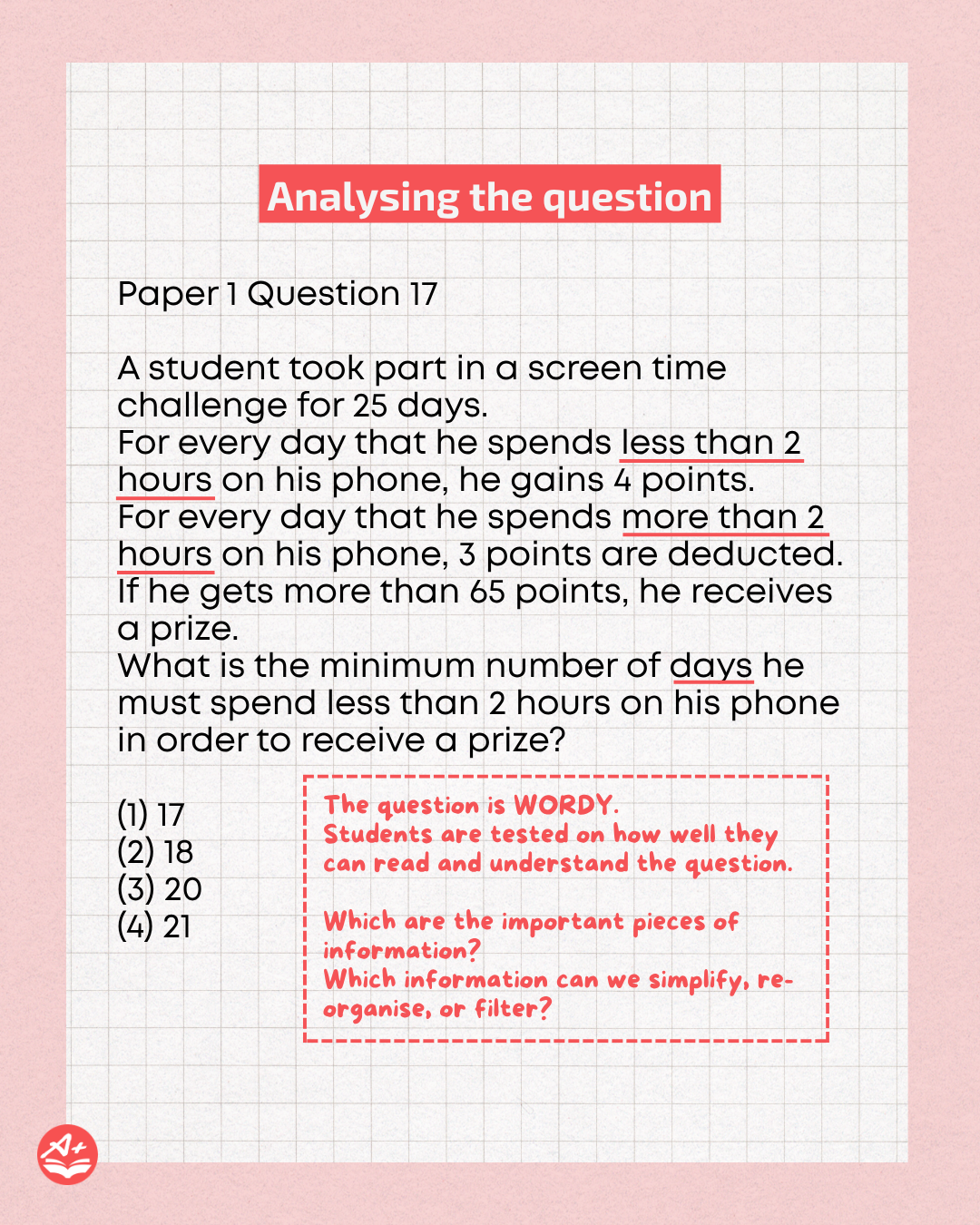
For example, some tutors highlighted an MCQ in the 2026 PSLE Math paper that looks relatively easy at first glance. The calculations themselves are not particularly difficult, but the question requires students to read the information carefully.
Here’s how we suggest approaching this question:
- Read the question VERY carefully. Underline the key words.
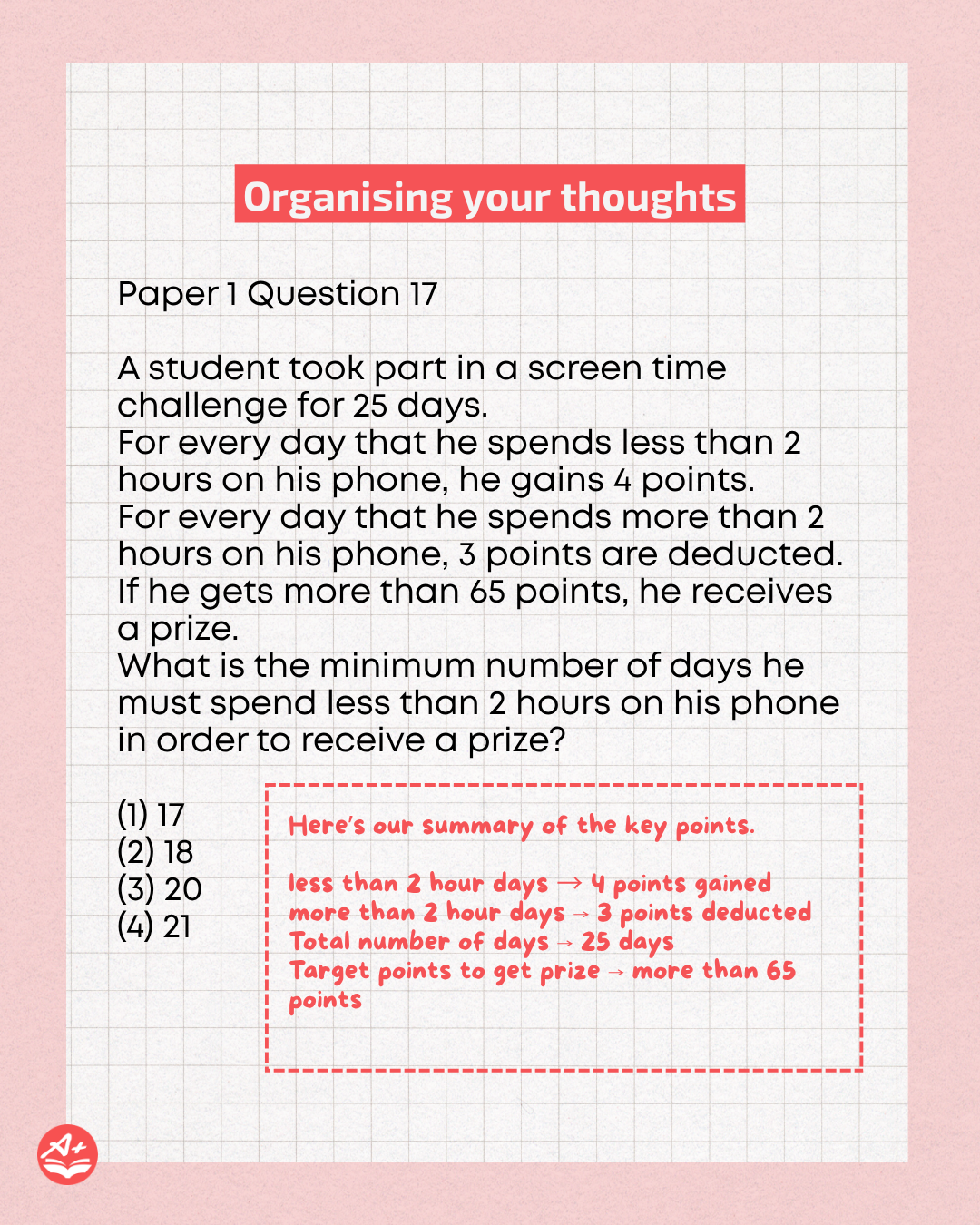
2. Summarise the key points in your own way. (e.g. write equations or point form)
3. Choose one of the options to do Guess and Check first. Use the answer to work backwards.
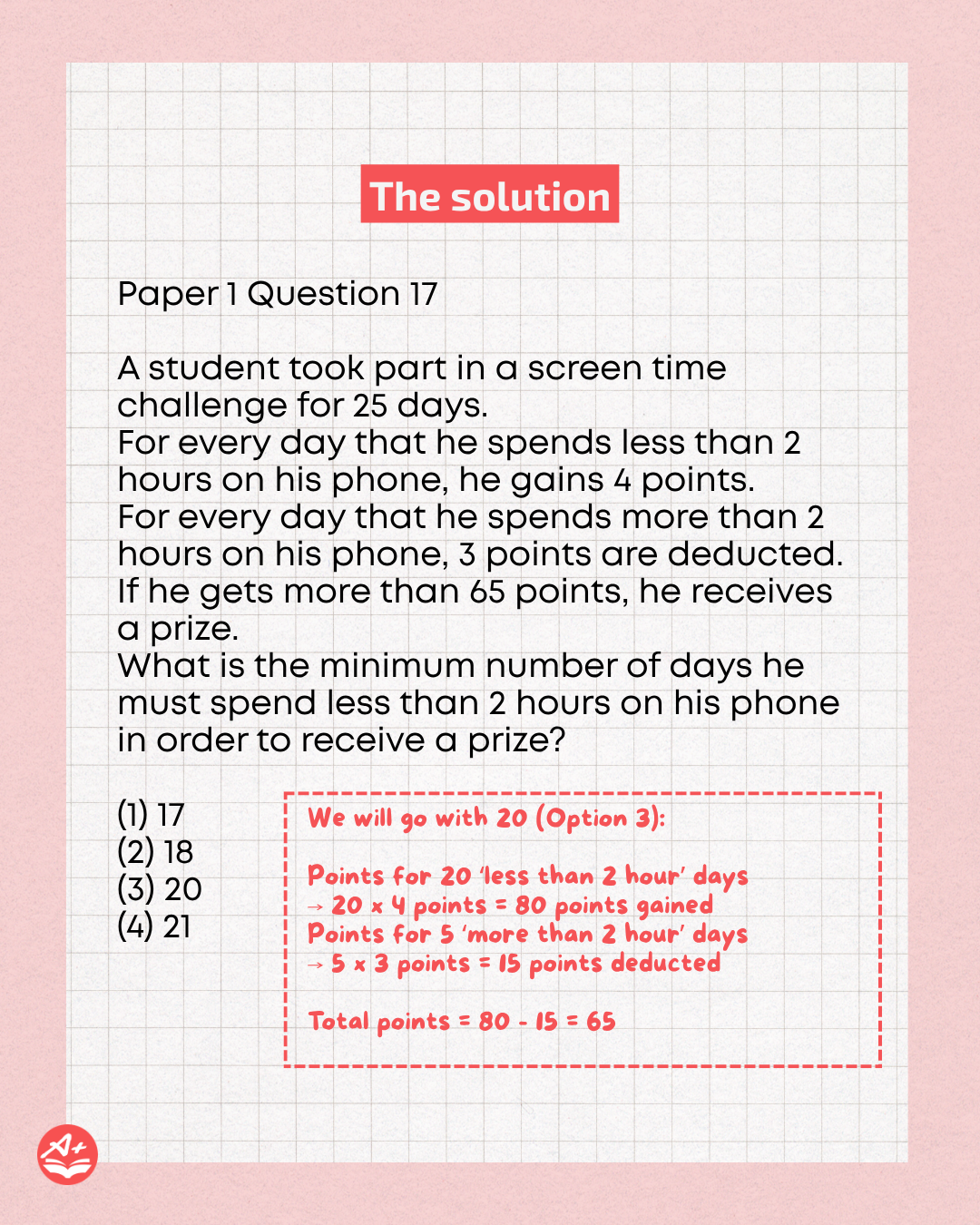
4. Depending on the outcome, decide the next option to Guess and Check, or select the right option as the answer.
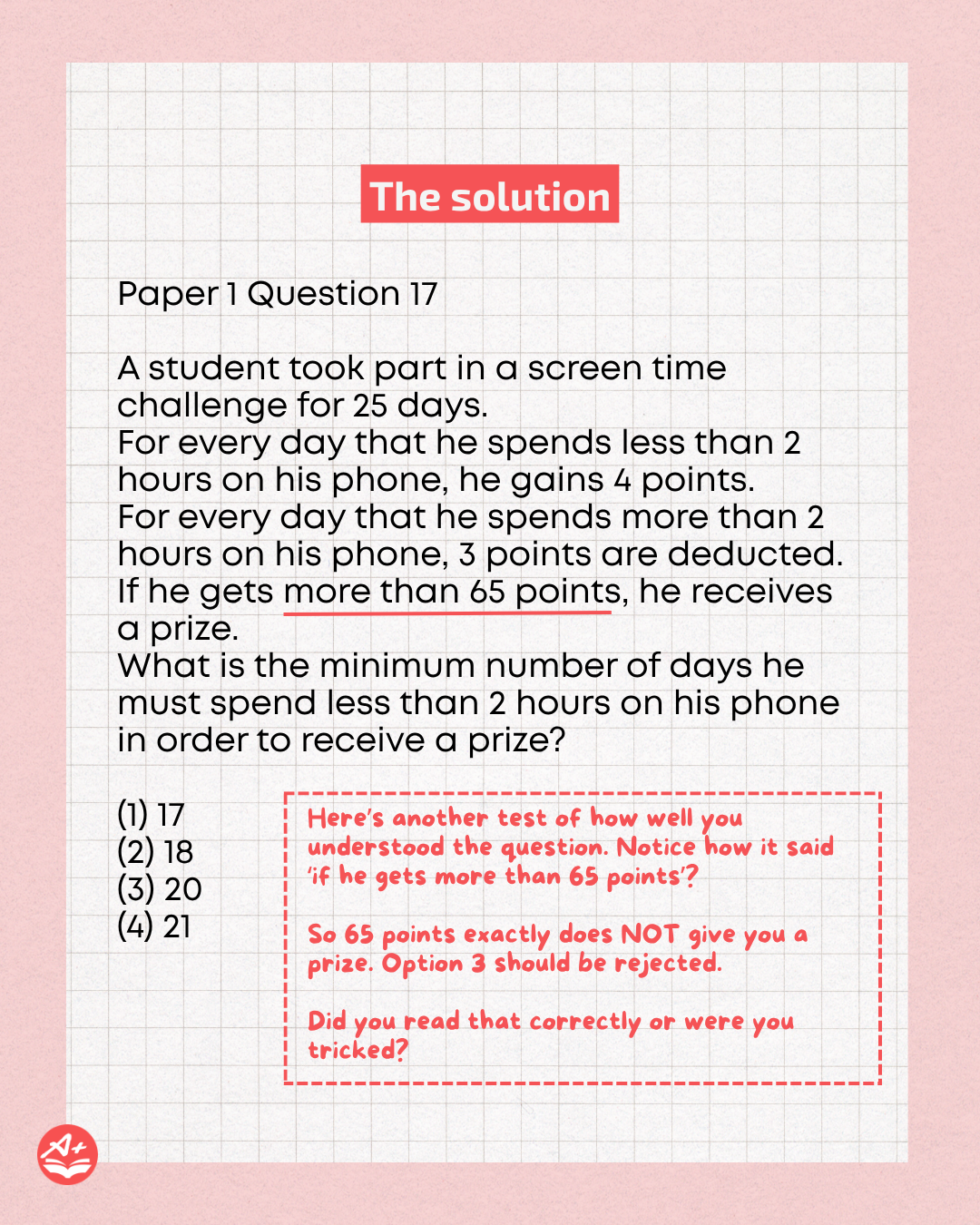
This tests more than just calculation skills. Students need to think logically, identify useful information, and choose an efficient approach — all while keeping an eye on the clock.
The takeaway: Being good at Math is not just about knowing how to calculate. It is also about knowing how to approach a question efficiently, especially when time is limited.
Expect the unexpected
The 2026 PSLE Math paper was not necessarily about showy questions that immediately stump students. Instead, it contained smaller traps that could easily catch students off guard if they rushed through the questions or relied too heavily on familiar methods.
Another surprise came from the final question of Paper 2. The last question is often perceived as one of the most challenging questions in the paper, but this year, it was a 3-mark pattern question.
The topic of patterns has featured less prominently in recent PSLE papers, making it an unexpected choice for the final question this year.
The question is tricky because, rather than following a simple pattern of adding the same number each time, it involves an alternating pattern. Students need to recognise how the pattern changes and work out how to account for this variation, rather than simply applying a familiar method.
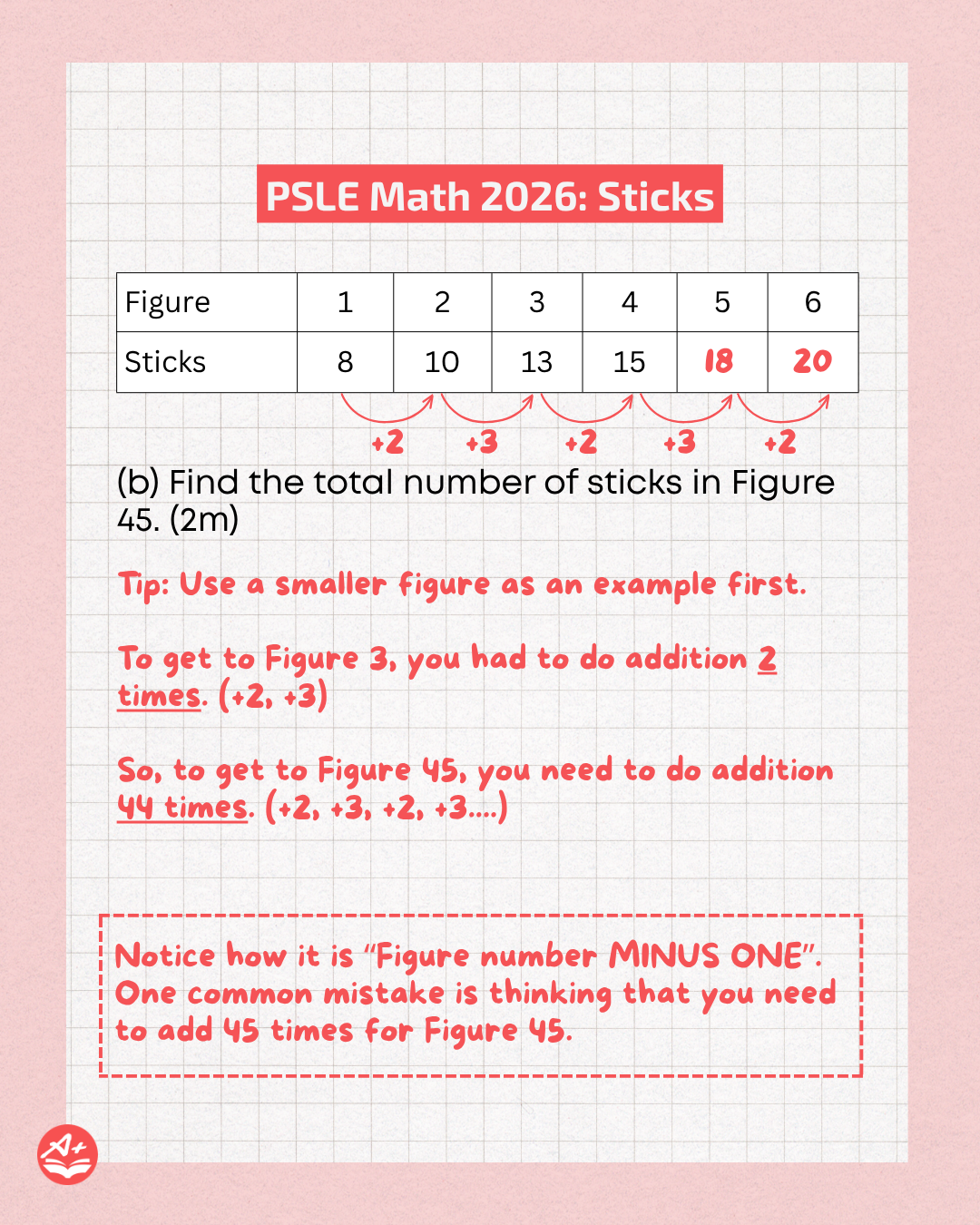
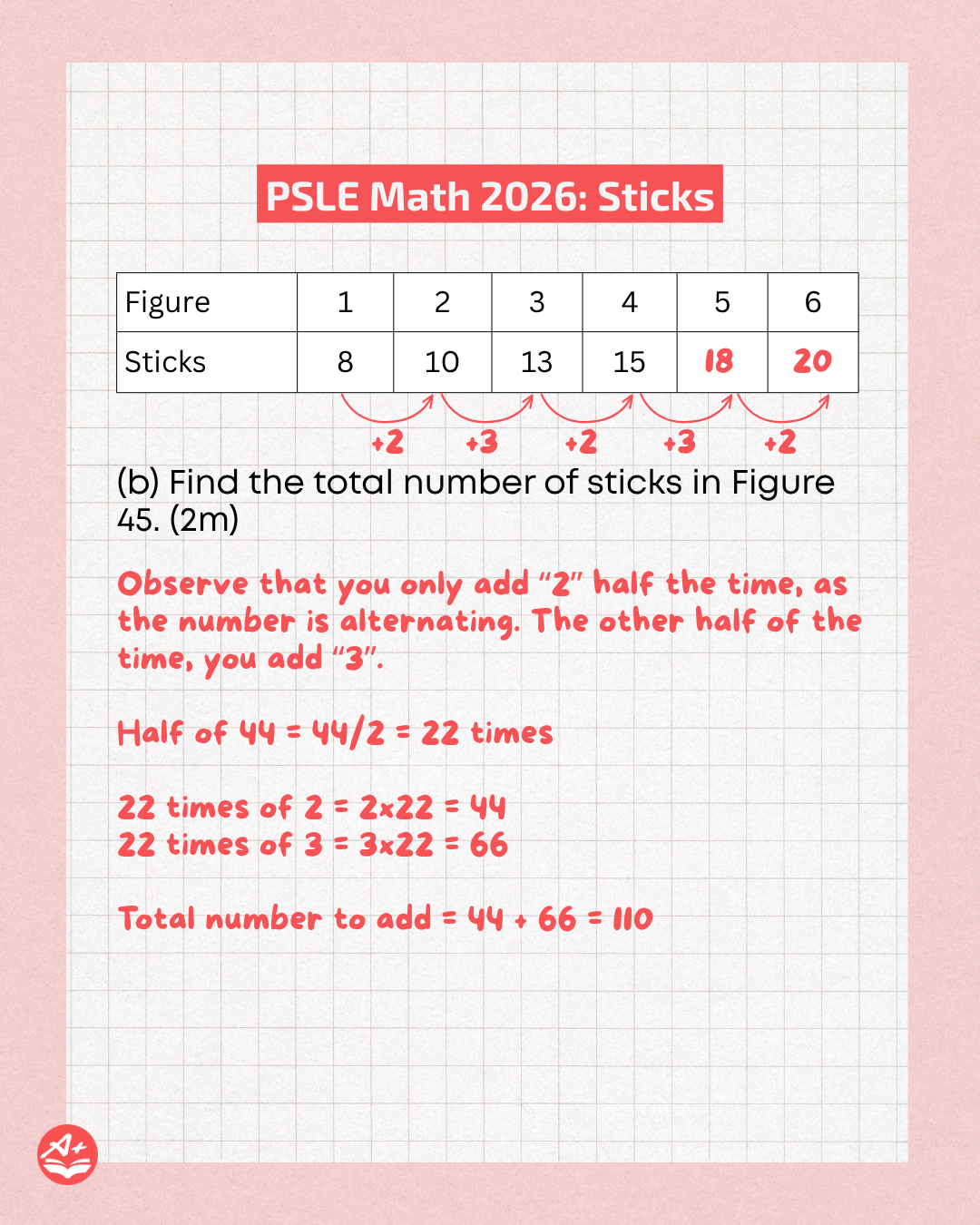
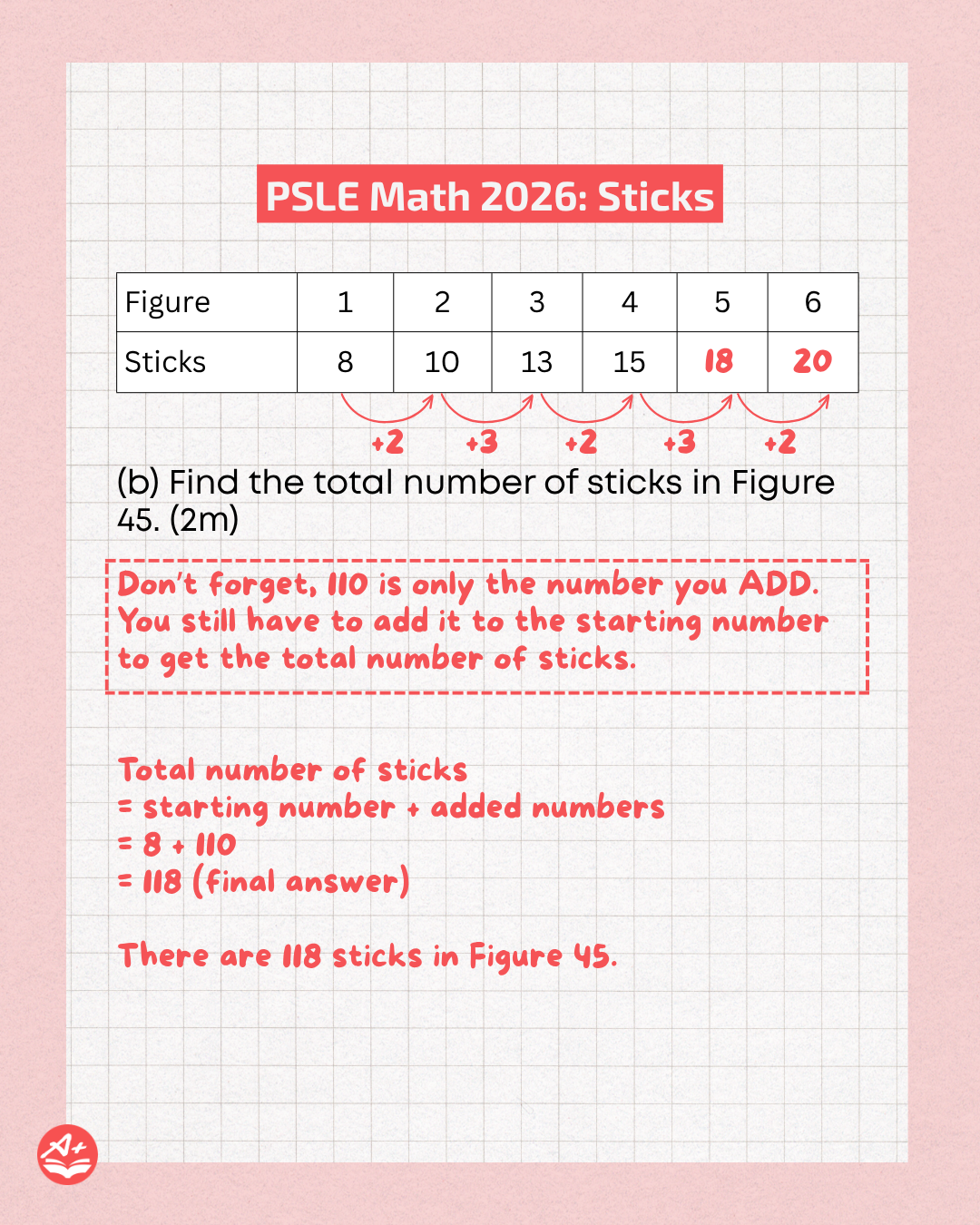
Questions like this remind us that students cannot rely solely on memorised steps or expect familiar question types to appear in predictable places. Even a topic that seems straightforward can become challenging when it is presented in an unfamiliar way.
The takeaway: Students should practise applying their Math concepts to different types of questions, including those that require them to recognise patterns, make connections, and adapt their approach.
The importance of practising past-year papers
Some PSLE Math tutors in Singapore have also noticed similarities between certain questions in this year’s PSLE Math paper and questions from past-year papers.
While we do not encourage students to rely on spotting topics or predicting questions, practising past-year papers is still a useful way to become familiar with exam formats and the different ways concepts can be tested.
Past-year questions can also help students identify recurring question structures, recognise common traps, and practise managing their time under exam conditions.
However, before you dive headfirst into completing practice papers, do take note that the PSLE Math syllabus has undergone changes over the years. Some topics, such as Speed, have been removed from the syllabus. Attempting outdated questions without checking whether they are still relevant could mean spending time on material that is no longer examinable.
Instead, use past-year papers strategically. Focus on questions that are relevant to the current syllabus, review your mistakes carefully, and take note of the concepts or answering techniques you need to improve.
After all, completing a large number of practice papers is not necessarily helpful if you keep making the same mistakes without understanding why.
Conclusion
The 2026 PSLE Math paper is a reminder that difficult questions do not necessarily need to look obvious or contain difficult calculations. Sometimes, the challenging part is in analysing the question, thinking logically, and making wise decisions. So, to our future PSLE students, here’s a reminder to look beyond memorising formulas, and instead spend time building up your problem-solving abilities.
Our PSLE tuition in Singapore provide opportunities to reinforce core concepts, practise challenging questions, and develop the problem-solving and exam skills needed for the examination. Through class discussions and guided practice, students will grow in understanding why a method works, recognising when to use it, and learning how to adapt when a question looks unfamiliar. With consistent practice and the right guidance, students can become better equipped to handle the unexpected – whatever the next PSLE paper brings.
Read more like this…

Forget Cramming: Build a PSLE Study Routine That Actually Works
Our tutors share their best tips on how to help primary school students get into a consistent habit of studying.

PSLE Exam Timetable Dates And Preparation Tips (2026)
Keep track of the 2024 dates for the Primary School Leaving Examinations in Singapore and read on as our tutors provide tips for preparing for it.

PSLE Cut-Off Points of Top Secondary Schools (2026 Intake)
Start your planning for shortlisting secondary schools with our at-a-glance guide to cut-off points of Singapore’s top schools.