
2026 PSLE English Composition Review: Analysis and Trends

What makes a English composition question difficult? If you have been keeping up with the past year PSLE English composition questions, you will find that the 2026 PSLE question is not at all surprising. Yet, this style of questions continue to challenge our PSLE Tuition students by how deceivingly easy they look.
For future PSLE students and parents, stick around as we’ll be reviewing the 2026 PSLE Paper 1 composition question in this article, including our observations of recent years’ trends, common struggles faced by students, and what future PSLE-takers should take note of.
Analysing the question
Once you know the 2026 PSLE English composition question, you will find that it is very accessible and relatable. However, this presented an extra level of difficulty: to write an engaging story based on this everyday topic.
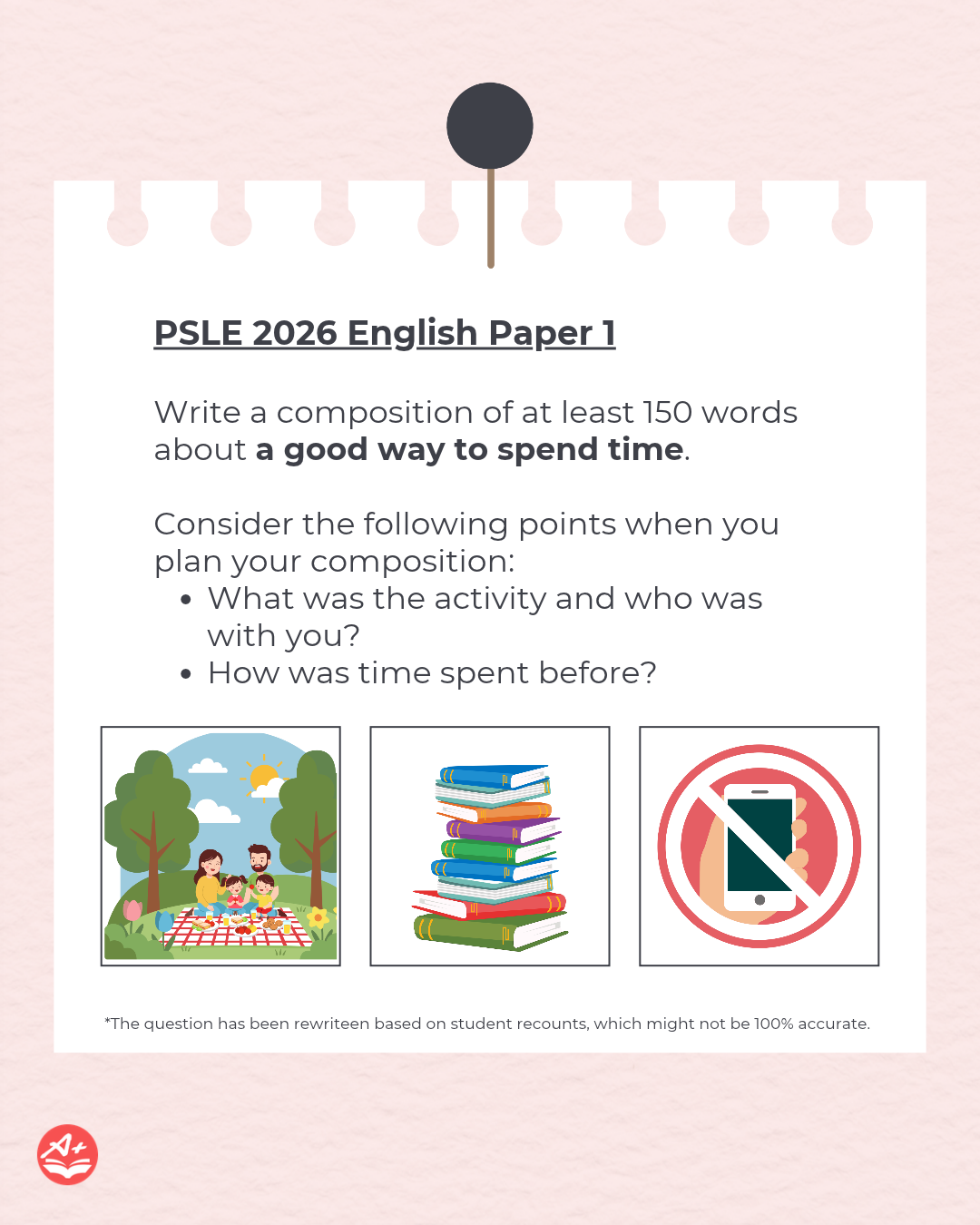
The 2026 PSLE English Continuous Writing prompt was:
Write a composition about ‘A Good Way To Spend Time’.
The three images shown to students were:
- A family having a picnic outdoors
- A stack of books
- A ‘no phone’ sign
A question like this has its advantages and challenges. On the one hand, the topic is very relatable. Most, if not all, students are likely to have some experience with what they consider to be ‘a good way to spend time’. They can draw on their hobbies, family activities, or other experiences that they find meaningful.
However, the tricky part is that the topic feels rather calm. There is no obvious conflict or climax hinted at in the title or the three images. This means students need to come up with their own storyline, including some form of conflict and resolution, to make their composition engaging.
Try it first: Think about how you can include a conflict and resolution in this composition.
If you get stuck, here are some ideas to get you started:
- I wasn’t spending my time wisely. Something happened that made me realise what it truly means to spend time wisely.
- My parents and I had different views on what ‘a good way to spend time’ meant. Through our disagreements, we learnt to understand each other better and compromise.
Don’t forget that the images and prompts are there to help you. Once you have a broad storyline in mind, the images can help you build the scenes and develop your plot.
This time, the pictures are quite broad and can be interpreted in multiple ways. Remember, too, that you can use any combination of the images – you don’t need to use all of them. So don’t be afraid to get creative!
Having a distinct storyline can help your composition stand out, especially when many students may approach the same topic in similar ways.
Try it first: Think of a few different ways to interpret the images and link them together.
If you need some help, here are a few ideas we’ve come up with:
- Picnic: A family picnic on a weekend evening, or a camping trip during the school holidays.
- Books: Spending time reading, or tidying up your book collection and rediscovering an old favourite.
- Phone: A phone-free day to spend more time with family, or a phone ban imposed by Mum to curb your phone addiction.
The same image can lead to very different stories depending on how you interpret it. The key is not simply to include an image in your story, but to use it meaningfully to develop your characters and plot.
Recent PSLE trends
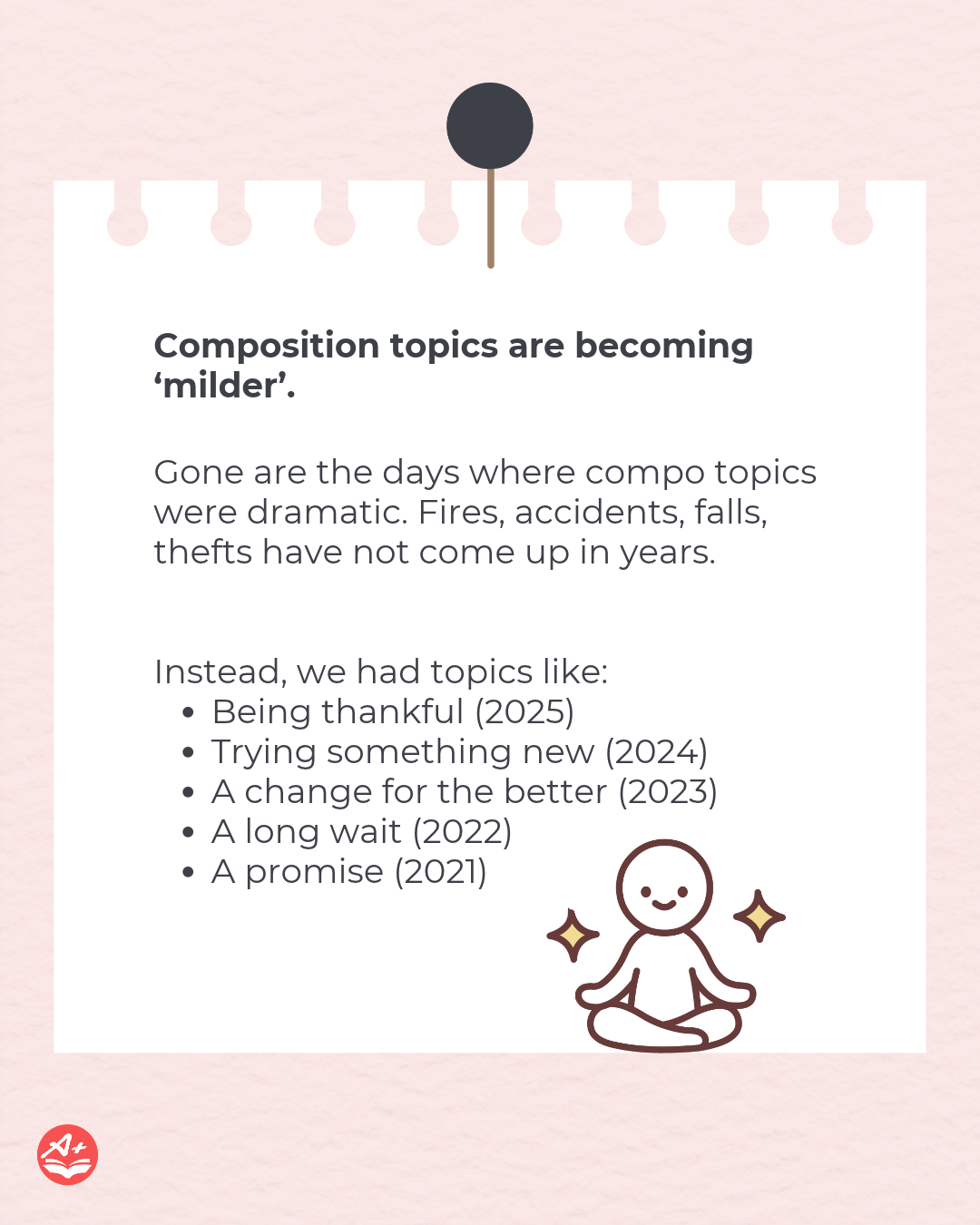
Similar to the past few years, this year’s topic is very everyday and relatable. Highly sensational storylines involving robberies, fires, and car accidents are less representative of the kind of approach students should rely on when preparing for PSLE English composition.
This shift towards familiar, everyday situations allows students to draw on their own experiences and observations. However, it can also be tougher to write an engaging story when the topic sounds calm and neutral.
After all, when a topic doesn’t immediately suggest a dramatic event, students need to create interest through their storytelling rather than relying on an exciting premise.
As such, students should practise tackling a range of composition topics, including those that seem ordinary at first glance. Here are three areas to focus on.
Develop a clear conflict and resolution
A good story needs something to happen. This doesn’t mean every composition needs a dramatic accident or a major disaster. Even an everyday disagreement, a personal disappointment, or a difficult decision can provide enough conflict to move the story forward. The conflict gives the story direction, while the resolution shows how the situation changes by the end.
Develop your characters
A story becomes more engaging when readers can see a change in the character as they grow and experience things throughout the story. Don’t stop at just describing events, but also include how the characters react to the situation through their words, actions, thoughts, and expressions. This helps your reader relate better to your characters and make them feel more real.
Practise ‘show, not tell’
‘Show, not tell’ is a useful writing technique that helps students bring their stories to life.
For example, instead of writing, “I was nervous about speaking to my parents,” a student could describe fidgeting with their fingers, avoiding eye contact, or rehearsing what to say in their head.
These details help readers experience the scene rather than simply being told what happened.
However, descriptions should serve a purpose. Adding too many adjectives or describing every small action can slow the story down. Students should focus on details that reveal emotions, build tension, or move the plot forward.
Conclusion
The 2026 PSLE English composition question is a good reminder that a simple topic can still make a challenging composition. When the subject is familiar and the images are open to interpretation, the challenge lies in developing a distinctive storyline and making it interesting to read.
For future PSLE-takers, the best preparation is not simply to memorise model compositions or collect impressive phrases. Instead, our PSLE English tutors help students practise developing clear storylines, creating believable conflicts, showing emotions through descriptions, and writing resolutions that feel meaningful.
With regular practice and feedback, students can learn to look beyond the topic at face value and discover the many different stories they can tell. After all, a good composition isn’t necessarily about having the most dramatic plot – it’s about how effectively you bring your story to life.
Read more like this…

PSLE Tutor’s Tips For Conquering The English Vocab Cloze
These practical tips by our English tutors are perfect for strengthening vocabulary and helping students score well in the PSLE English cloze passage.

PSLE English: 3 Tools To Help You Solve The Compre Cloze
The PSLE English comprehension cloze doesn’t have to be a game of luck. These handy tools will help you fill in the blanks with more confidence!

Insights By Tutors: Biggest PSLE English Compo Mistakes!
Our tutors share the most critical mistakes primary school students make in their English compositions. Learn what to avoid in your next compo!