
Is DSA Still Worth The Effort For Your Primary School Child?

The Direct School Admission (DSA) scheme was introduced as an alternative pathway into secondary schools, recognising students for their strengths in specific talent areas – both academic and non-academic. Initially limited to entry into a handful of elite secondary schools in Singapore, the DSA has since expanded to include a wider range of schools and talent domains.
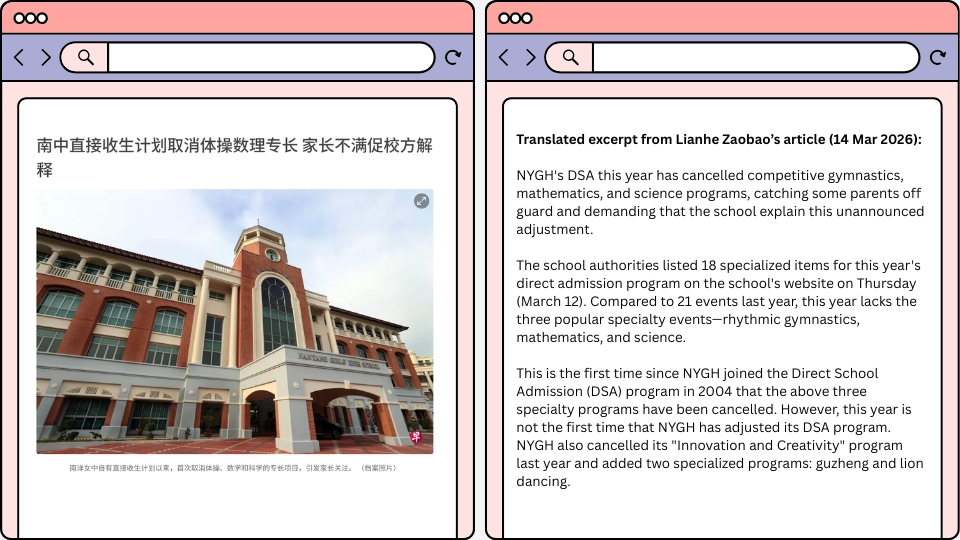
Recently, however, a recent news report has reignited discussions about the DSA scheme. In short, Nanyang Girls’ High School removed several DSA categories for its 2026 intake, announcing the change just two months before the application window is expected to open. This came as a shock to many parents, some of whom had already invested significant time, effort, and financial resources into preparing their children through enrichment classes, training programmes, and competitions.
This raises an important question: is DSA still worth the investment? And is it a viable pathway into your desired secondary school? Let’s take a closer look.
Advantages of the DSA Scheme
Reduces PSLE pressure
DSA can help alleviate some of the stress associated with the PSLE. Students who secure a place in their desired school through DSA do not need to compete in the Secondary 1 posting exercise.
That said, DSA offers are not unconditional. Students must still meet the minimum PSLE score required for their posting group, ensuring they are able to cope with the academic demands of their chosen school.
Encourages holistic development
For students with strong interests or talents beyond academics, DSA provides valuable recognition and support. It reflects a broader educational philosophy – one that values not only academic achievement, but also excellence in areas such as leadership, sports, and the performing arts.
Criticisms of the DSA Scheme
Fosters intense competition
In pursuit of DSA opportunities, some parents begin building their child’s portfolio from a very young age – enrolling them in training programmes and competitions as early as Primary 1. While nurturing a child’s interests is beneficial, doing so primarily to gain entry into a desired school can create unnecessary pressure.
Moreover, students without access to such resources may find themselves at a disadvantage, making it harder for them to stand out despite genuine talent.
Academic challenges for DSA students
While students in the Sec 1 Posting Exercise need to compete for spots in a school using their PSLE score, DSA applicants are usually only required to meet the minimum PSLE score for their posting group. As a result, some DSA students may enter a school with below-average grades compared to their peers. It is not uncommon to see DSA students struggle academically once admitted, particularly in more competitive school environments.
In addition, DSA students are often required to commit to their chosen talent area through co-curricular activities (CCAs) or specialised programmes. These commitments can be time-consuming, leaving less time and energy for academic work.

The Bottom Line
For students with genuine passion and talent, DSA remains a meaningful pathway that recognises and rewards their strengths. It allows them to pursue their interests without feeling that their efforts are disconnected from their academic journey.
However, the system can become highly competitive, especially when some attempt to “game” it. Students who are in more underprivileged positions may lose out, simply because they do not have the resources to sign up for extra classes and competitions to build their portfolio.
Ultimately, real test comes after admission: can the student balance the demands of their DSA commitments while keeping up academically?
Advice to Parents
It is important not to place all your hopes on DSA, especially given that schools may revise their criteria with little notice. Instead, aim for a balanced approach – supporting both your child’s academic development and their personal interests.
Preparing for the PSLE should remain a priority, regardless of whether a DSA offer is secured. That’s because, beyond grades, the PSLE journey helps students develop essential study skills, discipline, and a learning mindset – foundations that are crucial for success in secondary school.
Conclusion
Gaining entry into a secondary school is only one part of the journey. How a student grows and develops along the way matters just as much—if not more.
Whether or not you choose to pursue DSA, it is important to prepare earnestly for the PSLE while cultivating strong study habits and a solid academic foundation.
At Future Academy, we offer programmes like DSA preparation and PSLE tuition in Singapore to support your goals, whichever pathway you prefer. Feel free to reach out and learn more about how we can support your child’s journey!
Read more like this…

2026 PSLE Math Review: Tricky Questions To Learn From
Dive into the 2026 PSLE Math paper to learn about the tricky questions, learning points, and trends that future PSLE students should know.

Forget Cramming: Build a PSLE Study Routine That Actually Works
Our tutors share their best tips on how to help primary school students get into a consistent habit of studying.

PSLE Exam Timetable Dates And Preparation Tips (2026)
Keep track of the 2024 dates for the Primary School Leaving Examinations in Singapore and read on as our tutors provide tips for preparing for it.